Op-Ed: Modularization is good for small ports
Future port growth won’t be won by tonnage, it will be won by flexibility. Modular construction, where buildings and infrastructure are fabricated in factory-built sections and delivered to job sites for rapid assembly, is reshaping global logistics, and small ports like the Port of Monroe are in a perfect position to win.
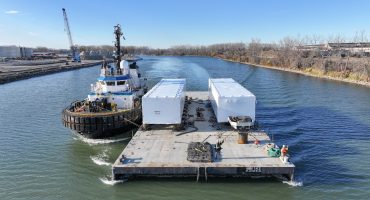
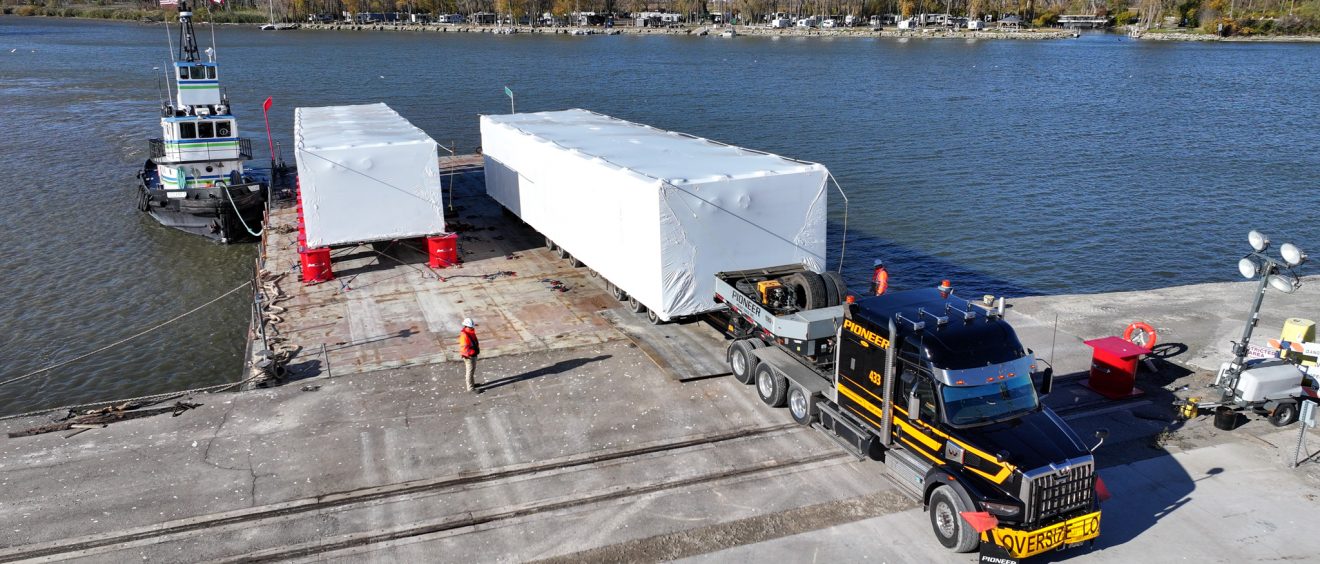
In 2025, the Port of Monroe was the critical link to transport modules for a mission-critical data center in the Greater Toronto area.
Throughout the fall of 2025, I watched our Turning Basin dock, built in the 1930s, function as the center of this data-driven cargo evolution. This was an ambitious project for a small port but our team- led by DRM Terminal Management and complemented by partners old and new- knocked it out of the park.
Monroe’s natural constraints push us toward niche cargo, positioning us as a perfect fit for modular construction. While large ports prioritize container and bulk throughput, modular projects depend on flexible scheduling, open staging areas, and direct multimodal access. These are advantages that define how Monroe operates.
Monroe offers immediate access to I-75 and dual Class I rail service, creating rare multimodal connectivity for project cargo in the Great Lakes. Rather than routing modules through congested port facilities, cargo owners and freight forwarders can stage, discharge, and deploy specialized shipments at Monroe with schedule reliability and operational focus.
There are a lot of capital investments happening in the Great Lakes region, ranging from renewable energy projects to data centers. Modularity makes it possible for a small port like Monroe to play a critical role.
At Monroe, tonnage does not capture the full value of the cargo being moved across our docks. In spring 2025, we handled a project cargo shipment with Spliethoff in support of a regional automotive OEM. In tonnage, it was smaller than a typical bulk export that DRM Terminal Management completes more than 20 times per season.
What mattered was that an international vessel called at Monroe, Michigan to discharge high-value project cargo. Each international delivery generates an estimated $1 million in regional economic impact, underscoring the value of project cargo in driving nearshoring investment and supporting local jobs.
This is why vessel calls are a more meaningful metric to us. In 2025, the data center project generated 20 new vessel calls at the Port of Monroe.
Whatever the cargo, we want to be able to help move it efficiently and economically. Modularization is now central to how the Great Lakes region is building pharmaceutical capacity, grid-scale energy storage, mission-critical digital infrastructure, and even housing. These projects rely on factory-built modules, containerized power systems, and prefabricated mechanical assemblies that must be imported, staged, and deployed on tight schedules.
Modular cargo doesn’t move like commodities — it moves on project timelines, where precision and coordination matter more than scale. With the right marine and landside infrastructure in place, the Port of Monroe is positioned to accelerate the deployment of these next-generation solutions across the Midwest.